Distance
Clear, confident vision for the world around you.


Experience vision beyond ordinary progressives.

VisuLuxe is an advanced premium progressive lens engineered to deliver a wider, smoother and more natural visual experience across distances.
From the first glance in the morning to the smallest detail on your screen, from conversations across the room to reading up close — VisuLuxe is designed to make every transition feel effortless.
Because premium vision isn’t just about seeing more. It’s about seeing naturally, comfortably and confidently
VisuLuxe is designed around these everyday visual demands, creating a seamless progression of vision that helps you move naturally from one visual task to another.
Clear, confident vision for the world around you.
A comfortable visual zone for screens, dashboards, conversations and everyday activities.
A precise and comfortable near zone for reading, smartphones and detailed work.
One lens. Multiple distances. One seamless visual experience.
Prescription Progressive Lenses


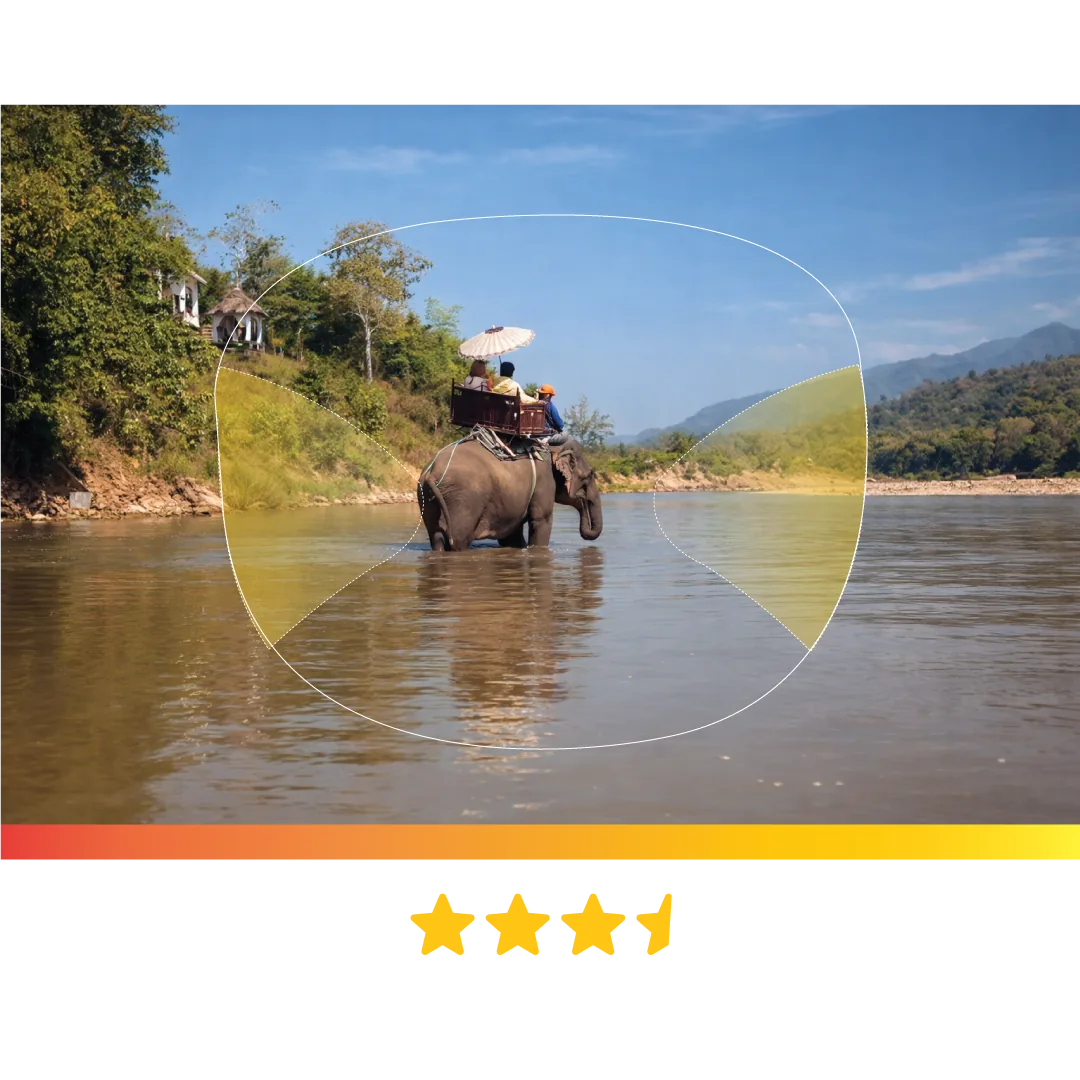
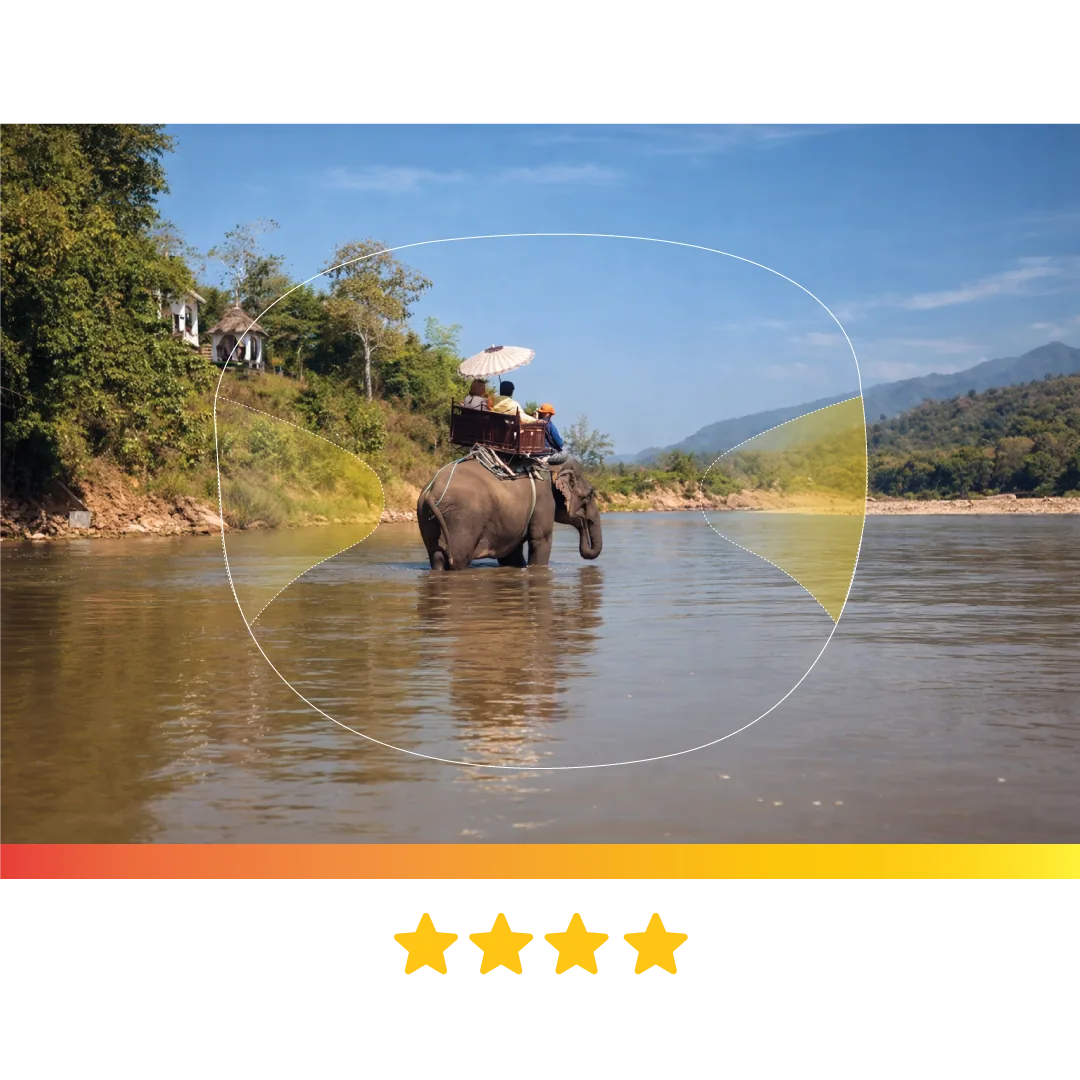
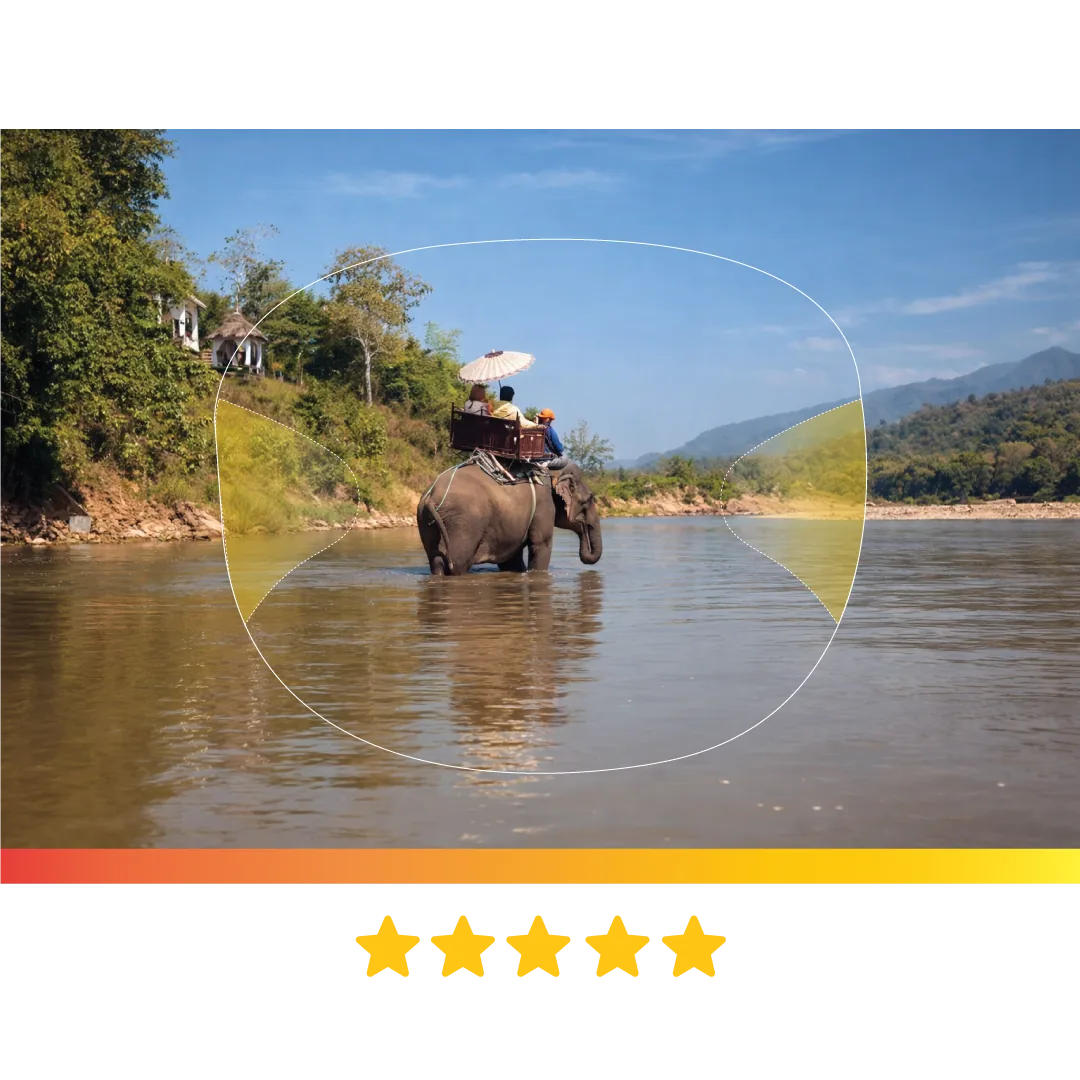
Swipe or scroll to compare all five lenses
| Technology | VISULUXE Swift | VISULUXE Stabilis | VISULUXE Steady | VISULUXE EXCEL | VISULUXE PERSONA |
|---|---|---|---|---|---|
| Ray Track | Not included | Not included | Included | Not included | Not included |
| Advance ABS Technology | Not included | Not included | Not included | Not included | Included |
| ABS Technology | Not included | Included | Included | Included | Not included |
| BIOS Technology | Included | Included | Included | Included | Included |
| Ray Track 2 | Not included | Not included | Not included | Included | Included |
20-Minute Adaptation Guarantee

By using the wearer personalization parameters, Digital Ray Track compensates oblique aberration for all gaze directions.
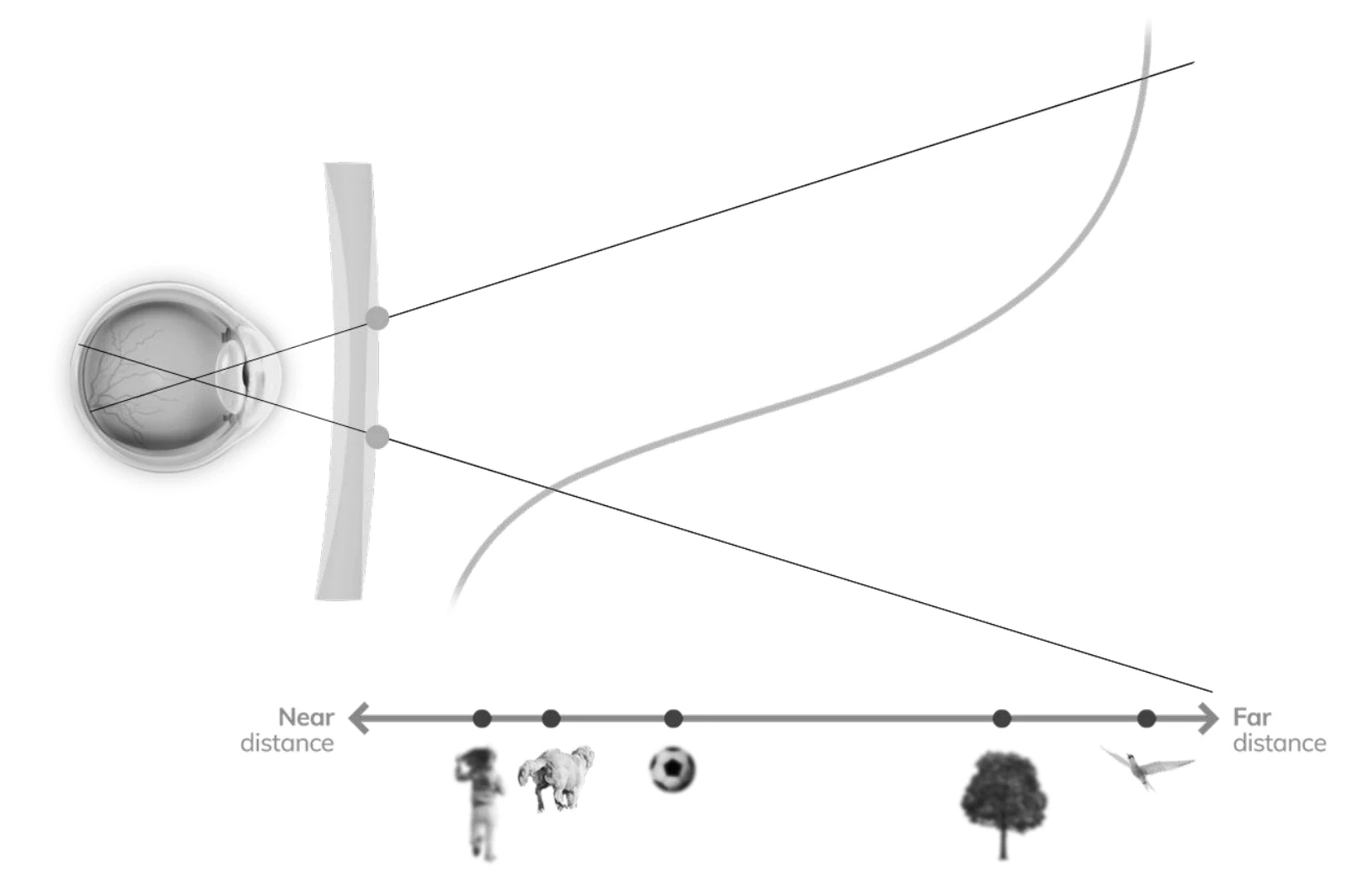
The optimization process computes oblique aberration for all gaze directions.
Due to accommodation, for a concrete gaze direction, there is a range of distances the patient can focus. A point in the lens does not really correspond to a single point in the space.
Analyzes oblique aberrations at various focal distances for each direction of gaze. Minimization of oblique aberrations is balanced throughout the accommodative space providing extremely clear and precise focus.
Due to accommodation, the spherical power of the human eye can change.
Then, just by using a minor amount of accommodation, spherical power errors* induced by oblique aberration can be naturally compensated.
The set of mathematical methods incorporated in Digital Ray Track 2 includes this fact.

Carefully balances the mean power required for intermediate and near vision, achieving a perfectly symmetrical and smooth distribution
ABS Technology is a technological breakthrough in free-form, digital lenses. In addition to controlling for unwanted cylinder power, ABS Technology addresses unwanted changes to mean power in the lateral areas of the lens.
Non-ABS PAL:- Effect of peripheral mean power on distance vision
ABS PAL:- Effect of peripheral mean power on distance vision
Advanced ABS Technology is an improvement of ABS Technology. Advanced ABS Technology enables more sophisticated control of the mean power distribution, improving performance for intermediate and near vision.
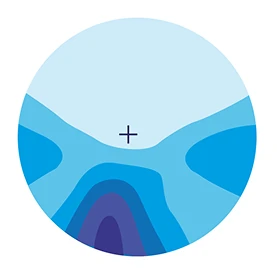
Limited vision zones with more peripheral blur
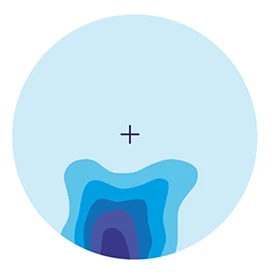
Balanced vision zones with improved visual comfort
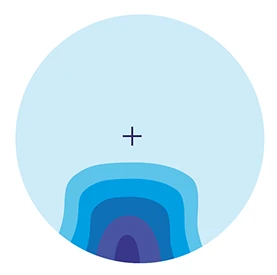
Wider, clearer vision zones for effortless viewing
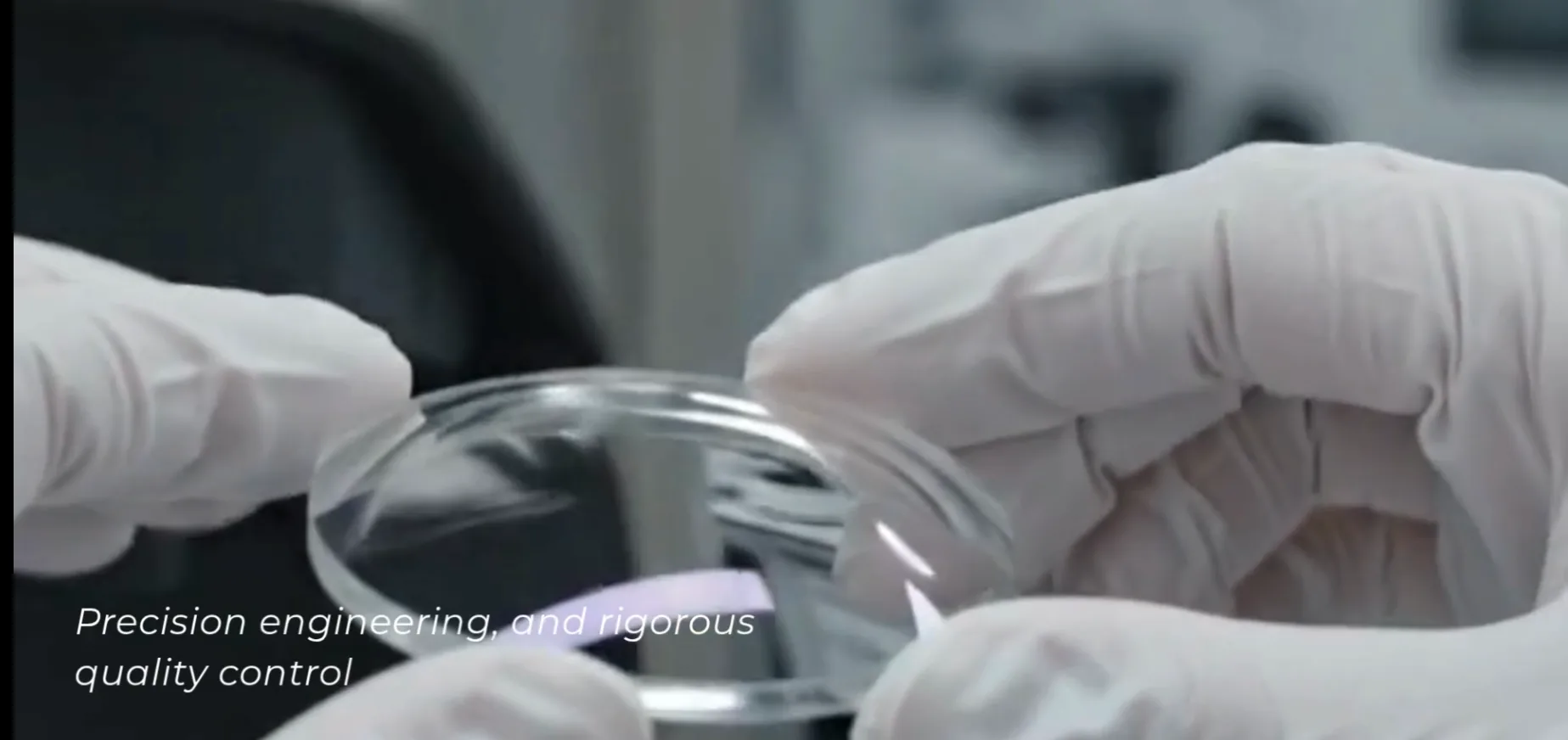
Manufacturing process to deliver lenses as per the Prescription
BIOS* technology (or "surfacing") is the manufacturing process of grinding and polishing a semi-finished lens blank to match a specific prescription
While standard "stock" lenses are pre-moulded in bulk, surfaced lenses are custom-crafted in an optical lab to handle complex vision needs like high prescriptions, astigmatism, or progressive designs
BROAD IMPROVEMENT OPTICAL SURFACE
*Broad Improvement in Optical Surface
The transformation from a thick plastic “Blank" to a precise optical Lens involves several high-tech steps:
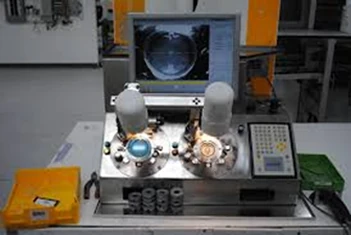
The lens blank is secured to a "blocker" using a specialised adhesive or metal alloy. This provides the stability needed for high-speed machining
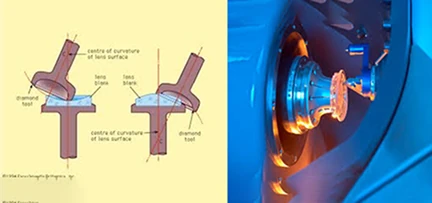
A computer-controlled (CNC) machine uses diamond-tipped tools or high-speed routers to carve the required prescription curves into the back of the lens
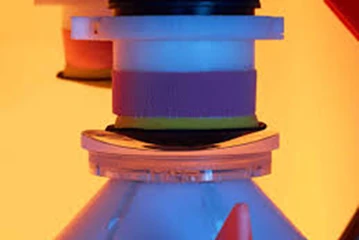
The initial carving leaves a "frosted" or rough surface. Fining smooths these marks, and polishing with an abrasive slurry brings the lens to crystal-clear optical quality
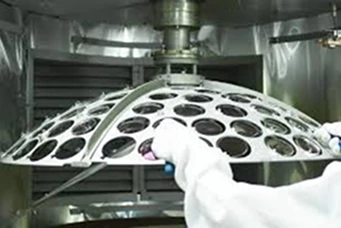
Modern surface technology often concludes with applying specialised layers, such as anti-reflective, scratch-resistant, or UV-protective coatings

Enhanced by a momplete set of individualization parameters that take into consideration th unique attributes of the frame and the preferences of the wearer.
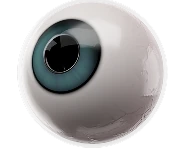
Incorporates the weare's accommodative ability into the traditional calculations, oblique aberrations are minimized more effectively than ever before.

The perceived power distribution remains stable, regardless of the prescription or base curve.This is especially benefical for high prescriptions and large or wrapped frames,

Calculated point by point to ensure wearers perceive the proper power when looking through their lenses at every distance and direction of gaze.