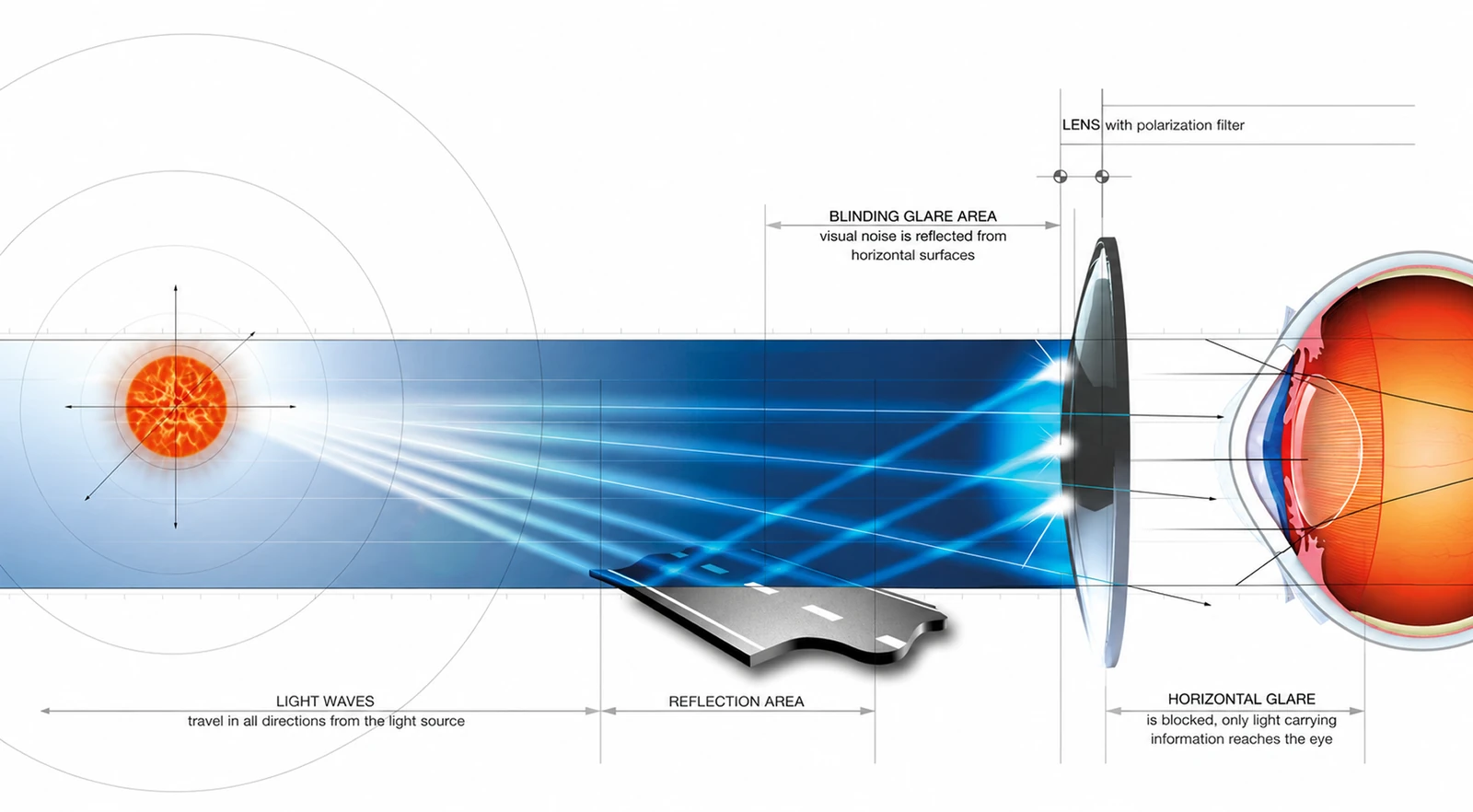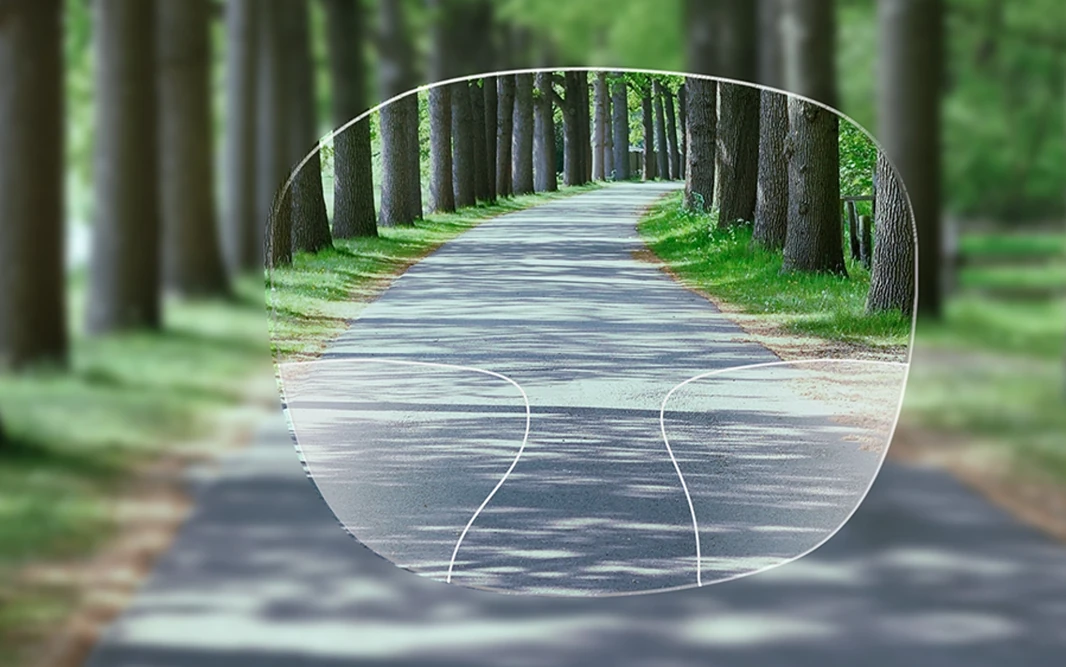

Photochromic lenses change tint with light conditions. Polarised lenses filter certain reflected glare. A product may combine both, but one term does not imply the other.
A lens that responds to light
Photochromic lenses change tint in response to light conditions. The useful questions are practical: how does this exact variant look indoors and outdoors, and what happens behind a windscreen?
Response varies with the product, material, temperature and light exposure. Some variants are intended to be clear indoors; others retain a tint. Never judge every photochromic lens from one indoor–outdoor image.
Two technologies, two different jobs.
Changes tint as light conditions change. Ask about indoor state and windscreen response.
Filters certain reflected glare. Ask about outdoor use and electronic displays.
A filter for reflected glare
Polarisation addresses certain reflected glare, such as light coming from water or a road. It is often considered for a prescription sun pair. Tint colour, gradient and mirror finish are separate choices.
Polarised lenses can change the appearance of some electronic displays. If a screen is essential to a wearer’s work or travel, test it with the intended lens.
Compare the exact product, not just the category
Transitions offers different variants with different indoor and behind-the-windscreen behaviour. VisualEyes also presents Twilight as a light-responsive option and NuPolar as a polarised sun-lens family. Availability and behaviour should be checked for the exact product and market.
Ask an optician to compare indoor state, outdoor state, windscreen response, polarisation and intended use. That is more useful than one blanket promise about “adaptive” lenses.
Questions worth asking
- Do I need a clear indoor lens, a sun pair, or both?
- How does this exact variant behave behind a windscreen?
- Will polarisation affect a display I rely on?
Category reference: Transitions product information. Confirm VisualEyes specifications against the current catalogue.