
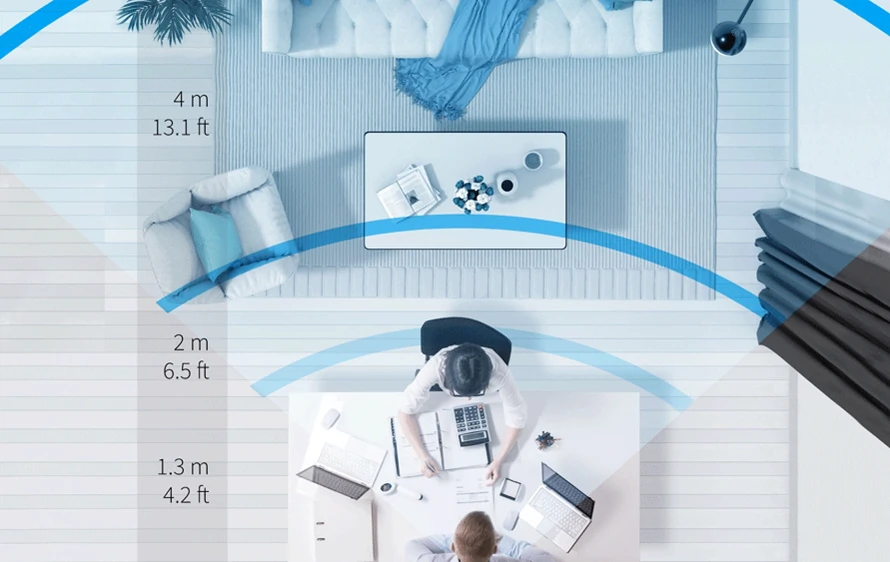
An occupational lens is designed around sustained near and intermediate work. Ask how far the wearer needs to see across the workspace.
Start with the room
A desk is more than one distance. A wearer may move from a document to a monitor, then look up to a colleague or across the room. Ask where each task happens and which one takes the most time.
A conventional reading pair serves close work. An everyday progressive covers a broader range, including distance. An occupational design can give more attention to near and intermediate tasks, but its useful range depends on the exact design.
Show the role of a second pair
Position the office lens as a purpose-built option for a workspace—not a replacement for distance vision when the wearer leaves it. For many customers, the clearest explanation is “your everyday pair for the day, a task-specific pair for sustained desk work.”
VisualEyes OfficePAL is the relevant family to explore. Its near-led and intermediate-led options should be matched to measured working distances and the wearer’s prescription.
Keep the promise specific
Do not promise that an office lens treats every cause of eye strain or that it is suitable for driving. The recommendation should follow an eye-care professional’s assessment, the selected design’s limits and the wearer’s real workspace.
Put the idea to work.
“Show me the distance from your eyes to your screen, and the farthest point you need to see while working.”
Map document, screen and room distances on the actual workstation.
Compare a close-reading task with a wider near-to-intermediate workspace.
Confirm the selected OfficePAL option and explain when the wearer should switch pairs.
Questions worth asking
- What is the main screen distance?
- How far across the room must the wearer see?
- Will this pair be used only at work?
Category reference: ZEISS explanation of office-lens use. Confirm VisualEyes specifications against the current catalogue.